info@qilowatt.lv I +371 29351873


Smart energy management service that balances the electricity grid
The operation of electricity grids is more complex today than ever before. Changing consumption habits, the integration of renewable energy, and growing demands on energy supply have created a need for smarter solutions. One such solution is the flexibility market, which helps balance the grid, benefits both consumers and system operators, and strengthens energy security.

Revenue is generated as your system:
reduces consumption at times when the grid is short of power;
shifts consumption to periods when energy is cheap and in surplus.
Typically, the resulting revenue is at least 3× higher than the current spot price.
Automatic control ensures:
• maximum response speed and accuracy;
• reliable coordination among all participants;
• transparent reporting and fair revenue allocation.
By participating in the flexibility market:
• you earn passive income without daily system management;
• you shift load to cleaner and cheaper hours, reducing the need for fossil backup;
• you help keep the grid stable and strengthen energy security.
shifts consumption to periods when energy is cheap and in surplus.
Typically, the resulting revenue is at least 3× higher than the current spot price.
Automatic control ensures:
• maximum response speed and accuracy;
• reliable coordination among all participants;
• transparent reporting and fair revenue allocation.
By participating in the flexibility market:
• you earn passive income without daily system management;
• you shift load to cleaner and cheaper hours, reducing the need for fossil backup;
• you help keep the grid stable and strengthen energy security.
Frequently Asked Questions
Overview & Key Concepts
What do mFRR UP and mFRR DOWN mean?
- mFRR UP(Manual Frequency Restoration Reserve Up) – the network needs to be recharged → your battery will drain the network (or the load will decrease).
- mFRR DOWN(Manual Frequency Restoration Reserve Down) – power needs to be removed from the mains → your battery will recharge from the mains (or load will increase).
Either way, you will earn compensation according to market conditions. Activations take place in short windows, usually 15 minutes long, and the Qilowatt Optimizer automatically resets to your normal mode after the window.
What is the flexibility market?
The flexibility market (or frequency market) is one of the most important balancing mechanisms in the Estonian electricity grid, through which the system operator Elering keeps the frequency of the grid stable at 50 Hz. By participating in the market, the consumption or generation of equipment is balanced in real time to assist the grid. In return, a financial reward is paid to the participants.
The flexibility market is open to both private customers and businesses. If your system is connected via Qilowatt, your battery (or other managed load) can automatically receive mFRR signals:
- mFRR UP – power needs to be added to the grid → battery discharges to the grid / load decreases.
- mFRR DOWN – power needs to be removed from the grid → battery recharges / load increases.
These signals are generated according to the state of the network and usually last up to 15 minutes. After activation, the device will automatically return to your normal mode, allowing you to fully use your battery and other devices according to your preferences – for example:
- charge/switch according to Nord Pool’s hourly rates,
- give preference to domestic consumption,
- keep the capacity needed for back-up food.
Qilowatti Optimizer automatically manages within the limits of your preferences to maintain convenience and maximize revenue generation.
What do mFRR UP and mFRR DOWN mean?
- mFRR UP (Manual Frequency Restoration Reserve Up) – the grid needs to add energy → your battery discharges to the grid (or load decreases).
- mFRR DOWN (Manual Frequency Restoration Reserve Down) – the grid needs to remove energy → your battery charges from the grid (or load increases).
In both cases you receive compensation according to market conditions. Activations occur in short windows, typically 15 minutes, and the Qilowatt Optimizer automatically restores your normal mode after each window.
What is the flexibility market?
The flexibility market (also called the frequency market) is one of the key balancing mechanisms of Estonia’s electricity system, through which the system operator Elering keeps grid frequency stable at 50 Hz. By participating in the market, the consumption or production of devices is adjusted in real time to support the grid. Participants receive financial compensation in return.
Both households and businesses can join the flexibility market. When your system is connected via Qilowatt, your battery (or another controllable load) can automatically receive mFRR signals:
- mFRR UP – the grid needs to add energy → the battery discharges to the grid / load decreases.
- mFRR DOWN – the grid needs to remove energy → the battery charges from the grid / load increases.
These signals arise according to the grid situation and usually last up to 15 minutes. After an activation, the device automatically returns to your normal mode, and you can use your battery and other devices fully according to your own preferences — for example:
- charge/switch based on Nord Pool hourly prices,
- prioritize self-consumption,
- keep a reserve for backup power.
The Qilowatt Optimizer handles control automatically within the limits you set, so that your comfort is maintained and earning revenue is as smooth as possible.
Joining & Eligibility
How to join the flexibility market?
Through Qilowatt, connection is made as easy and automated as possible.
Necessary assumptions:
- Hybrid inverter
- Aku
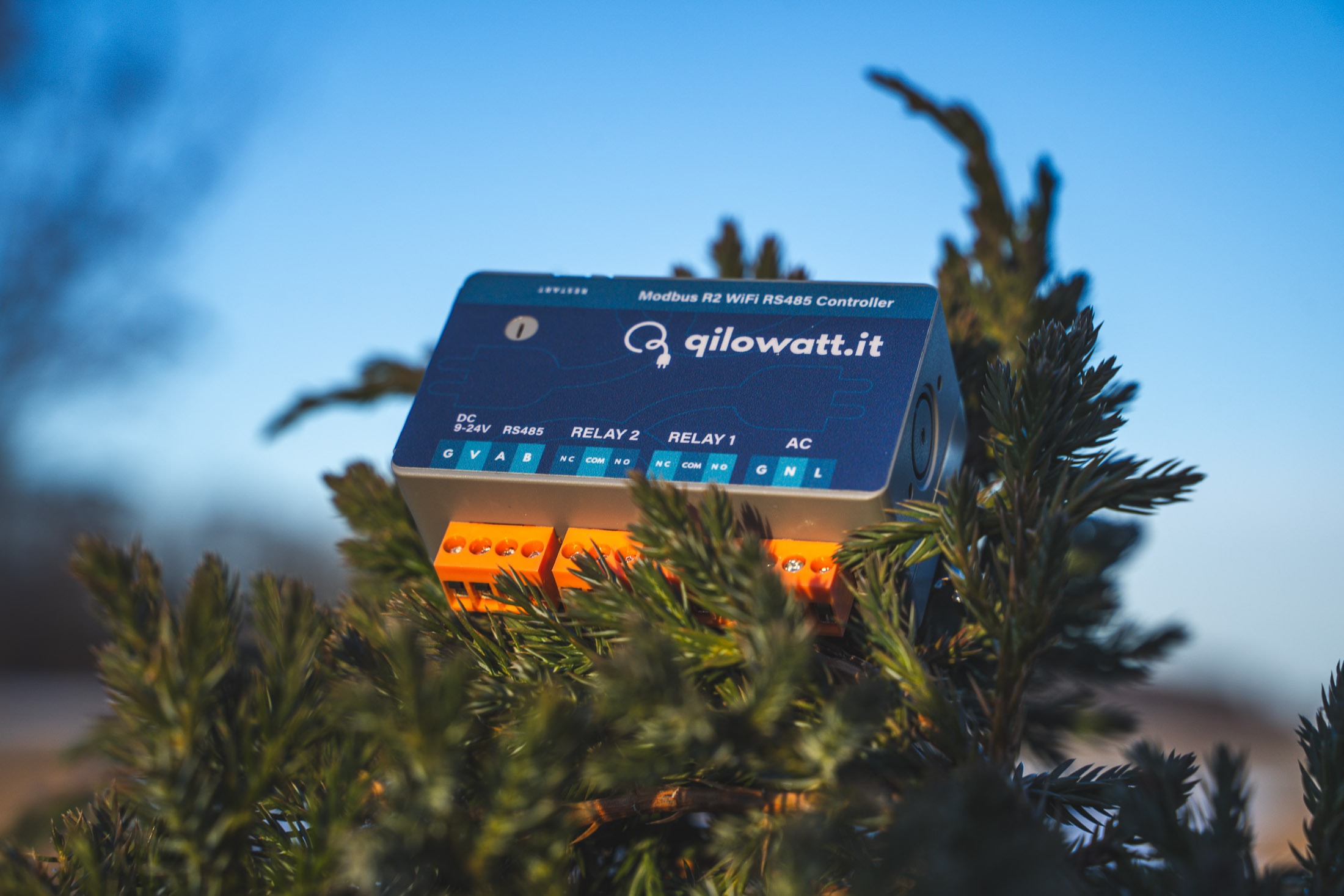
- Qilowatt controller (e.g. Modbus R2)
Steps:
- Installation/Connection. We’ll install the Qilowatt device and connect it to your hybrid inverter and battery.
- Log in to the platform app.qilowatt.it.
- Signing the contract. In the inverter view, you can download and sign the Flexibility Market Service Contract.
- Activation. After signing up, the service is activated and Qilowatti Optimizer automatically manages your devices according to your preferences.
How big should the inverter and battery be?
All systems can participate, regardless of capacity and battery capacity – even ~5 kW inverter and ~5 kWh battery is enough to get started.
The income depends in particular on:
- Battery capacity – the larger the capacity, the more energy can be used to fill the signals.
- Inverter capacity – higher instantaneous capacity generally means more revenue.
- The size of the head protection – too small a head protection can limit the actual output.
Conclusion: small systems are possible and cost-effective to participate in, but larger systems tend to generate more absolute returns.
What equipment is suitable for participating in the flexibility market?
The most cost-effective and our standard way to connect:
- Hybrid inverter + battery + Qilowatt controller (e.g. Modbus R2) – so you can execute both mFRR UP and mFRR DOWN commands and earn maximum net revenue.
But it can also:
- Manageable loads without battery: domestic hot water boiler, heat pump/HVAC, underfloor heating, certain EV chargers (generally lower yield than with battery).
- Commercial loads (e.g. refrigeration compressors, air handling units) with separate integration.
Does the flexibility market work everywhere in Estonia?
YES! Location does not matter.
The spectrum market is nationwide:
– The network is one (Elering)
– Signals go to everyone.Does it make sense to join the flexibility market?
Yes – if you have a hybrid inverter and a battery, participating in the flexibility market is a very efficient way to earn extra income.
- A higher return than just selling at the stock market price. Activation fees can be several times higher than simply selling electricity to the grid at an hourly rate.
- Faster battery payback time. The additional return helps to recoup the battery investment faster.
- Automatic operation. Qilowatt Optimizer manages your devices according to your preferences – you don’t have to manually intervene.
- A bet on a stable network. You help Elering to keep the 50 Hz frequency and the Estonian electricity grid in balance.
How do I join the flexibility market?
Joining via Qilowatt is designed to be as simple and automated as possible.
Requirements:
- Hybrid inverter
- Battery
- Qilowatt controller (e.g., Modbus R2)
Steps:
- Install/connect. We install the Qilowatt device and connect it to your hybrid inverter and battery.
- Log in to app.qilowatt.it.
- Sign the agreement. In the inverter view you can download and sign the flexibility service agreement.
- Activation. After signing, the service is activated and the Qilowatt Optimizer controls your devices automatically according to your preferences.
Does the flexibility market work everywhere in Estonia?
YES! Location doesn’t matter.
The flexibility market operates nationwide:
– There is one national grid (Elering)
-Control signals are sent to all participantsHow big do the inverter and battery need to be?
All systems can participate regardless of power and capacity — a ~5 kW inverter with a ~5 kWh battery is sufficient to get started.
Earnings depend mainly on:
- Battery capacity (kWh) — a larger capacity lets you fulfill more activations.
- Inverter power (kW) — higher instantaneous power generally means higher revenue.
- Main fuse size — too small a fuse can limit the actual output.
Summary: participation with smaller systems is possible and profitable, but larger systems usually earn more in absolute terms.
Is it worth joining the flexibility market?
Yes — if you have a hybrid inverter and a battery, participating in the flexibility market is a very effective way to earn additional income.
- Higher earnings than simply selling at spot price. The compensation paid for activations can be many times higher than just selling electricity to the grid based on the hourly price.
- Faster payback for the battery. The additional revenue helps the battery investment pay back more quickly.
- Automatic operation. The Qilowatt Optimizer controls your devices according to your preferences — you don’t need to intervene manually.
- A contribution to a stable grid. You help Elering keep the frequency at 50 Hz and the Estonian power system in balance.
Which devices are suitable for participating in the flexibility market?
Most profitable and our standard way to join:
Hybrid inverter + battery + Qilowatt controller (e.g., Modbus R2) — this allows you to handle both mFRR UP and mFRR DOWN commands and earn maximum net revenue.
You can also use:
- Controllable loads without a battery: domestic hot-water boiler, heat pump/HVAC, underfloor heating, certain EV chargers (revenue is generally lower than with a battery).
- Business loads (e.g., refrigeration compressors, ventilation units) via a separate integration.
Earnings & Payouts
When is the income paid out?
Payments are made at the end of the month following the accounting period. The net result is taken into account.
- For individuals: your income is credited to your personal bank account at the end of the month.
- For the company: we send you a statement of income, on the basis of which the company can invoice you for the service.
When are payouts made?
Payouts are made at the end of the month following the accounting period. The net result is used for settlement.
- Individuals: the payout is transferred to your personal bank account at month-end.
- Companies: we send a revenue report, based on which the company can issue an invoice for the service.
Operations & Costs.
How much does it cost to participate in the flexicurity market?
If you already have a Qilowatt controller (e.g. Modbus R2) and management, there are no extra fees to participate.
Possible costs:
- mFRR DOWN energy consumption. When the system receives an order to load from the grid, this energy is purchased from your energy supplier (price + grid charges + taxes). Later, Qilowatt/Fusebox will compensate this cost in part or in full, depending on the price of the specific activation. The net effect is calculated on a monthly basis.
- Device/installation (if applicable). If there is no controller or connection, the cost of the device and installation will be added according to the price list (see Pricing page).
How can I see that signals are moving?
- The Qilowatt app has real-time graphs (power, SOC, etc.) where activations are marked as separate events.
- The activations are marked as mFRR UP (discharge/load reduction) and mFRR DOWN (charge/load increase).
- You can’t forecast them, but you can see the whole history: by day/month you can see the times, volumes and summary reports of activations.
Can I continue to use my battery?
Yes. Flexibility market activations are short (usually ~15min). The rest of the time, you can manage your battery exactly as you want – for example, optimizing it for Nord Pool prices, home consumption or reserve power.
After each activation, the Optimizer automatically resets to your preferred mode.
Can I keep using my battery as usual?
Yes. Flexibility-market activations are short (typically ~15 minutes). The rest of the time you can use your battery exactly as you like — for example optimizing by Nord Pool prices, self-consumption, or keeping a backup reserve.
After each activation, the Optimizer automatically restores your preferred mode.
Where can I see the signals?
- In the Qilowatt app you’ll find real-time graphs (power, SOC, etc.) where activations are marked as separate events
- Activations are labeled mFRR UP (discharging / load decrease) and mFRR DOWN (charging / load increase).
- They can’t be predicted, but the full history is visible: by day/month you can see activation times, volumes, and consolidated reports.
How much does it cost to participate in the flexibility market?
If your Qilowatt controller (e.g., Modbus R2) and control are already in place, there are no additional fees for participation.
Possible costs:
- mFRR DOWN energy cost. When the system receives a command to charge from the grid, that energy is purchased from your electricity supplier (price + grid fees + taxes). Later, Qilowatt/Fusebox compensates this cost partly or fully, depending on the specific activation price. The net impact is calculated in the monthly summary.
- Device/installation (if needed). If the controller or connection is missing, the device and installation cost applies according to the price list (see the Pricing page).
KratTrade
How does the response to commands work in the different modes of the inverter?
1️⃣ Normal mode
- PV generates and charges the battery, there is no energy flow to the grid.
- When a signal mFRR UP 12 kW is received, 12 kW is supplied to the grid (also from battery if needed).
- If there is a mFRR DOWN 12 kW, 12 kW will be purchased through the grid.
2️⃣ PV Sell / Sell mode (or battery 100%)
- If the inverter sells 10 kW to the grid and the mFRR comes DOWN to 6 kW, the grid sales are reduced from 10 → 4 kW and the revenue is earned on 6 kW.
- If an mFRR DOWN 15 kW is required, 5 kW will be purchased from the grid – the response power is 15 kW.
- If the mFRR UP is 5 kW, the inverter sells 15 kW to the grid and revenue is earned on 5 kW.
3️⃣ Buy-mode (or low battery)
- If you consume 10 kW and the mFRR comes DOWN to 5 kW, you increase your consumption to 15 kW and earn revenue on 5 kW.
- If the mFRR UP is 8 kW, you reduce your consumption by 8 kW and earn revenue on 8 kW.
- If the mFRR UP is 15 kW, the system will sell 5 kW to the grid and revenue will be earned on 15 kW.
- If the battery is low and the system is in Normal mode, no signal is sent (no response possible).
NB! Everything is done automatically, no need to do the maths yourself!
Are all signals coming in at full power?
No. The response power is demand-based – it depends on how much energy was currently flowing in the direction of the network when the signal arrived. For example, a 15 kW system may not always respond at full power.
How does KratTrade differ from our previous partner?
KratTrade measures and charges for grid-side energy flows – that is, the energy that goes into the grid or the network, not just the energy in the battery.
The result:
– more signals and earning opportunities,
– clearer overview of revenues,
– all customers receive all signals from the frequency market (except when the battery is already full or empty).What is a “baseline” and how does it affect returns?
Baseline is a snapshot that determines how much energy your system is currently moving towards the grid (e.g. whether you are selling to the grid or consuming from the grid). When KratTrade sends a signal, revenue is earned on the change that occurs with respect to the baseline.
Example: if the baseline is 0 kW and a command comes in to sell 12 kW to the grid → you earn revenue on 12 kW.What is KratTrade?
KratTrade is Qilowatt’s new partner in the frequency market. It is a platform through which customers can join a unified portfolio that responds more actively to market signals and offers greater earning potential and transparency.
What is KratTrade?
KratTrade is Qilowatt’s new partner platform for participating in the flexibility (frequency) market.
It enables users to join a unified portfolio that reacts more dynamically to market signals, offering greater earning potential, better transparency, and improved response efficiency.How is KratTrade different from our previous partner?
KratTrade measures and rewards grid-side energy movement — meaning the energy flowing to and from the grid, not just what happens inside the battery.
This means:
- more active market signals and earning opportunities,
- clearer overview of revenue,
- all users receive the same market signals (unless the battery is full or empty).
What is the “baseline,” and how does it affect earnings?
The baseline represents your system’s current state — how much energy you are currently exporting or importing from the grid. When KratTrade sends a signal, you earn money based on the change relative to that baseline.
Example: if your baseline is 0 kW and KratTrade sends a command to sell 12 kW → you earn revenue from 12 kW of delivered power.
What happens when the inverter operates in different modes?
1️⃣ Normal mode
- PV generation covers local consumption; excess is stored in the battery.
- When a mFRR UP 12 kW signal arrives, 12 kW is exported to the grid (from PV or battery).
- When a mFRR DOWN 12 kW signal arrives, 12 kW is imported from the grid.
2️⃣ PV Sell / Sell mode (or battery at 100%)
- If the inverter exports 10 kW and receives a mFRR DOWN 6 kW signal → grid export decreases from 10 to 4 kW, and earnings are calculated from 6 kW.
- If a mFRR DOWN 15 kW signal arrives → 5 kW is imported, total reaction = 15 kW.
- If a mFRR UP 5 kW signal arrives → export increases to 15 kW, earnings are based on 5 kW.
3️⃣ Buy mode (or empty battery)
- If consuming 10 kW and a mFRR DOWN 5 kW signal arrives → consumption increases to 15 kW, earning from 5 kW.
- If a mFRR UP 8 kW signal arrives → consumption decreases by 8 kW, earning from 8 kW.
- If a mFRR UP 15 kW signal arrives → system starts exporting 5 kW, earning from 15 kW total.
- If the battery is empty and the system is in Normal mode → no signal is sent (not possible to react).
Do all signals come at full power?
No. Reaction power depends on the actual grid-side energy flow at the moment of the signal.
For example, a 15 kW system may not always react at its full capacity.